


The Government of the Republic of Zambia, through the Ministry of Mines and Minerals Development, has developed the National Three Million Metric Tonnes Copper Production Strategy. This strategy aims to accelerate and maximize the benefits for the people of Zambia from the country’s copper exploitation. By Enock Chifunda, Ministry of Mines, Zambia
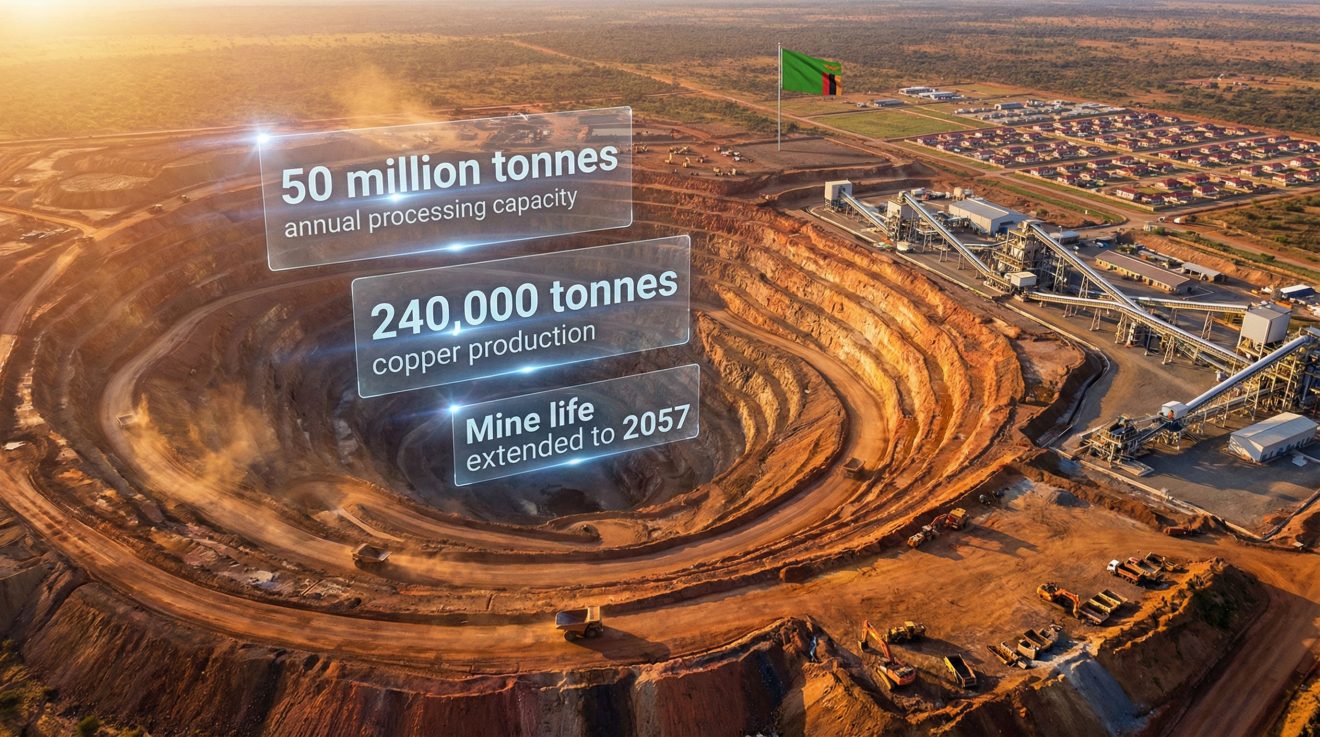
To this end, the National Three Million Metric Tonnes Copper Production Strategy has been designed to stimulate investment in mineral resource exploration, mining, processing, and the supply of goods and services. Nationwide high-resolution aerial geophysical surveys will provide improved geological information, which has previously hindered the discovery of more mineral resources. This initiative aims to increase copper production from the current average of approximately 800,000 metric tons per year to three million metric tons by 2031. Additionally, the strategy is based on emerging global opportunities, such as the green energy transition, where copper serves as a critical input material. Implementing this strategy is expected to drive growth, leading to higher revenue, foreign exchange earnings, and job creation. Effective monitoring and evaluation will be essential to achieving these goals.
As of 2026, the copper production strategy has attracted an increasing number of investors to mining-linked and bankable power projects in Zambia. Since 2022, over US$12 billion in mining investment has heightened the demand for reliable electricity, according to Kanona Power Company Limited.
At the recent Investing in African Mining Indaba in Cape Town, Kanona Board Chairperson Mr. Padmore Muleya noted that the scale of recent mining investment would necessitate significantly more power than the country has previously required, thereby increasing pressure on generation, transmission, and last-mile supply.
President Hakainde Hichilema, during his opening address at the conference, stated that more than US$12 billion in new foreign investment has entered Zambia since 2022, primarily directed toward mining projects fueled by the global copper boom. Muleya said that in 2026, energy investors will look for projects that can quickly make money and have clear ways to earn, such as power supply models connected to mining, renewable energy projects with storage or hybrid systems, and improvements in transmission and interconnectors for regional power trading.
Muleya also said that Kanona is helping clients accelerate project development and reduce risks by doing early technical checks, setting up strong power purchase and wheeling agreements, and using its client network to ensure steady sales.
He added that higher copper prices, despite recent fluctuations, are sustaining mining expansion plans in Zambia and the Democratic Republic of Congo’s Copperbelt, with major mining companies committing capital to exploration and large-scale projects.
Financiers remain focused on funding power projects that have credible off-takers, clear grid access, and strong execution capability.
For more information about mining projects, please contact info@mmmd.gov.zm.