


Self-Sufficiency, and the End of Importation by 2030
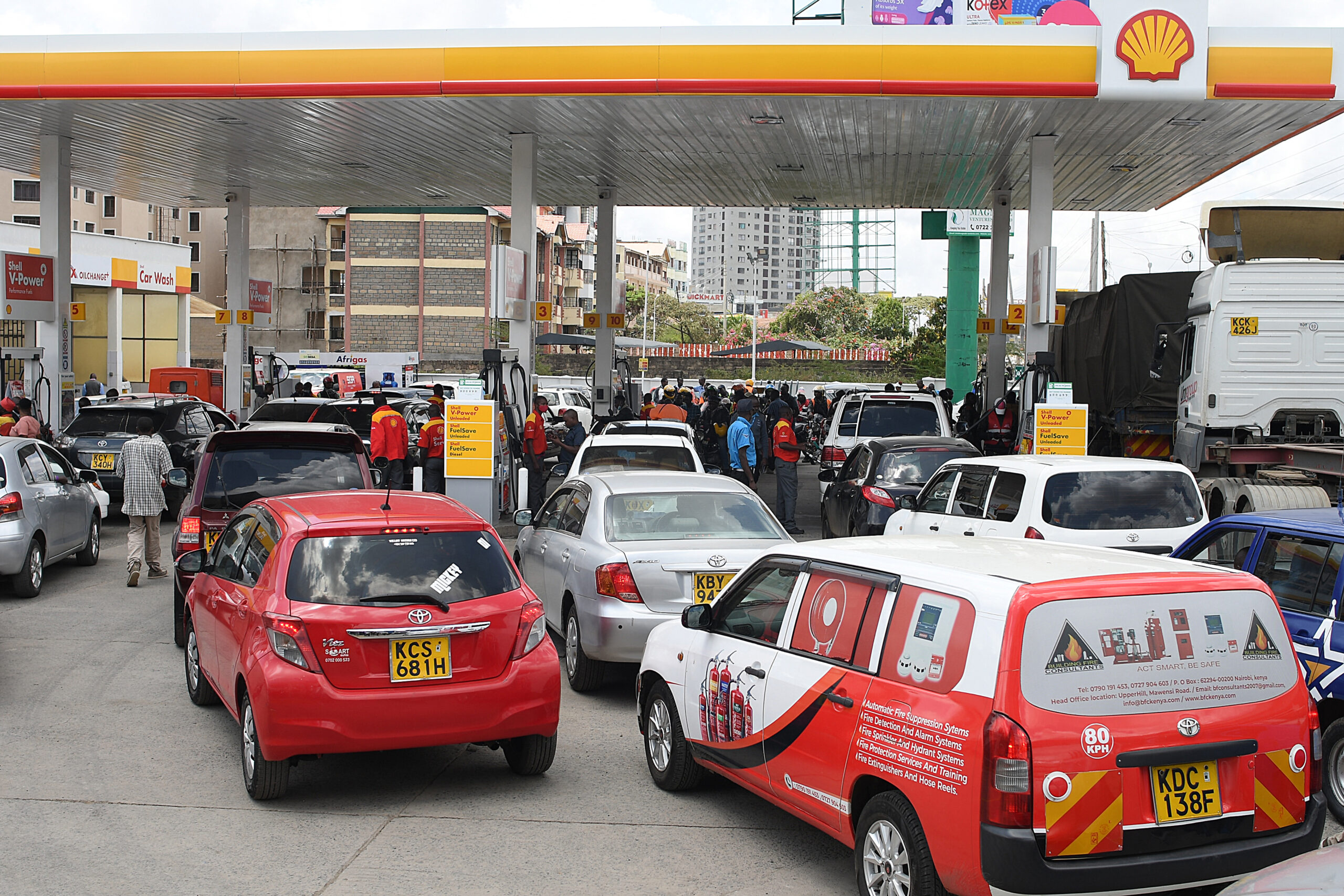
When Nigeria exports crude oil and imports gasoline, it is effectively exporting jobs, exporting value, and importing inflation. The economic leakage is staggering and will eventually lead to economic collapse according to Michael Mishun, Corpporate Africa, Business Analyst
For decades, Africa has presented a tragic paradox: a continent awash in hydrocarbon wealth yet perennially dependent on imported refined petroleum products. This dependency is not merely an economic inconvenience; it is a structural flaw that bleeds national treasuries, distorts fiscal policies, and fundamentally undermines sovereign development. As the continent looks toward 2030, a strategic revolution in downstream gas and petroleum production is not just an industrial goal—it is an existential necessity. Achieving fuel efficiency and halting importation requires a four-pronged approach: mega-refinery integration, strategic natural gas monetization, deliberate policy harmonization, and the creation of a pan-African distribution network. At the heart of this transformation lies the Dangote Petroleum Refinery, a monolithic symbol of private-sector capability, whose role, alongside the rehabilitation of Nigeria’s state-owned refineries, will be pivotal. However, hardware alone cannot solve a software problem; success demands a synchronized dance between industrialists, national governments, and regional financial institutions to dismantle the importation architecture that has for too long been the preferred business model of a parasitic political elite.
The Anatomy of a Paradox – Importation Undermines Development
To understand the urgency of the 2030 deadline, one must first deconstruct the true cost of importing refined fuels. When a nation like Nigeria exports crude oil and imports gasoline, it is effectively exporting jobs, exporting value, and importing inflation. The economic leakage is staggering. Beyond the direct cost of the cargo, importation imposes a triple burden: the drain on foreign exchange reserves, which destabilizes local currencies; the massive recurrent expenditure on subsidies, which starves education and healthcare of funding; and the logistical nightmare of marine traffic, which creates artificial scarcity at the pumps. These importation schemes create a shadow economy where “briefcase importers” profit from arbitrage, incentivizing the deliberate sabotage of local refining capacity. For Africa, fuel importation is the antithesis of the African Continental Free Trade Area (AfCFTA) vision. One cannot build a self-sustaining industrial base when the logistics and energy sectors are reliant on supply chains stretching to Rotterdam or the Middle East. Stopping importation by 2030 is not about protectionism; it is about plugging a haemorrhage of value that has kept the continent in a state of permanent economic anaemia.
Defining Fuel Efficiency in the Downstream Context
In the pursuit of self-sufficiency, “fuel efficiency” must be understood in two dimensions. The first is technical combustion efficiency—the production of cleaner-burning fuels with lower sulfur content, higher octane ratings, and compatibility with modern engines. The second, and more critical for the 2030 vision, is systemic efficiency: the elimination of waste in the value chain from the wellhead to the vehicle’s fuel tank. Currently, a significant percentage of Africa’s gas is flared or re-injected due to a lack of gas-gathering infrastructure. This is the lowest-hanging fruit for immediate efficiency gains. By capturing associated gas and channelling it into downstream production—Gas-to-Liquids (GTL), methanol, and LPG—Africa can simultaneously clean its skies and power its industries. True fuel efficiency by 2030 means a zero-flare policy enforced not just by law but by the economic pull of integrated processing plants, ensuring that every hydrocarbon molecule extracted is utilized to displace an imported product.
Dangote, the Anchor of a Continental Supply Chain
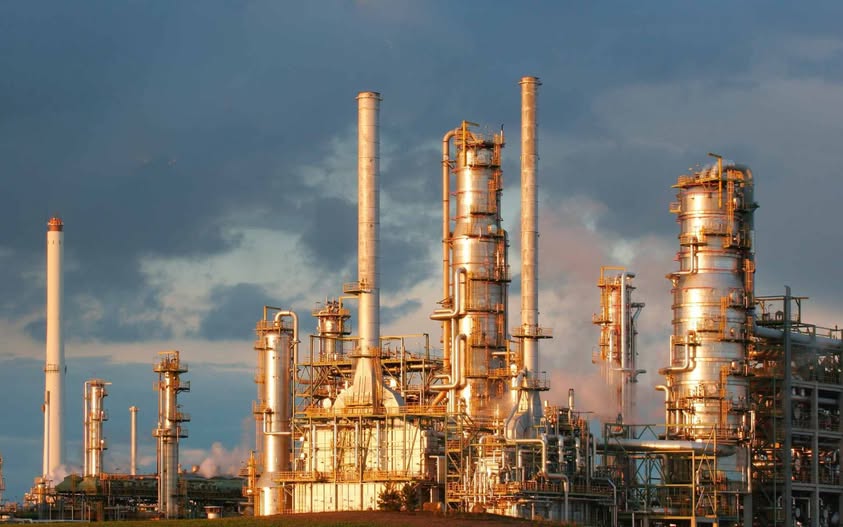
Aliko Dangote’s 650,000-barrel-per-day refinery is arguably the single most significant climate-adjacent industrial project in the Global South today. Its role in achieving fuel efficiency by 2030 is that of an anchor facility. Pre-Dangote, European refiners dictated the specification and price of the gasoline burned in Lagos or Accra. The Dangote refinery, with its state-of-the-art hydrocracking and desulfurization capabilities, has the capacity to produce Euro-V standard fuels. This immediately shifts the efficiency narrative: instead of flooding the West African market with dirty, “African-grade” fuels that damage engines and lungs, the refinery can set a standard that forces smaller regional refineries to upgrade or collapse.
However, hardware alone is not sufficient. Dangote’s strategic role must evolve from a mere producer to a wholesale guarantor of supply across the ECOWAS region. The company must spearhead the “Naira-for-Crude, Naira-for-Product” swap mechanism, de-dollarizing fuel transactions within West Africa. This is the most potent weapon against importation. By trading crude oil to the Dangote refinery and receiving refined products back in local currencies, Nigeria can insulate itself from the exchange rate shocks that have historically justified the existence of importers. Dangote must also lead the build-out of a marine and inland distribution network as efficient as its processing plant, utilizing its financial muscle to acquire tank farms and pipelines rather than relying on the rusty, atomized logistics network that plagues the region.
Dangote should also spearhead the construction of other refineries across Africa like the 650,000-barrel-per-day mega-refinery planned to be constructed in Tanga, Tanzania, with the announcement made last April and a projected completion date of 4 to 5 years. The initiative would transition East Africa from reliance on imports toward strategic self-sufficiency connecting the axis of energy independence and integrating both western and eastern Africa.
Dangote will finance and execute the project, built on the successful Nigerian model. The facility in Tanga takes advantage of its strategic port location, positioning it as the region’s refining hub. Kenya and Uganda, advocates of this plan, are expected to supply crude oil and utilize shared pipelines for the distribution of refined products. Meanwhile, South Sudan and the DRC will provide crude oil to the refinery for processing. This collaboration aims to reduce fuel costs and retain energy wealth within Africa.
Resuscitating Sleeping Giants, the Role of Nigeria’s State Refineries
A common fallacy in African energy discourse is that the emergence of Dangote renders the Nigerian National Petroleum Company Limited (NNPCL) refineries obsolete. This is strategically naive. The four state-owned refineries in Port Harcourt, Warri, and Kaduna are not just assets; they are locational advantages. Dangote’s facility in Lagos is a coastal export monster, but Africa’s vast interiors require distributed refining capacity to minimize the “last-mile” fuel inefficiency caused by trucking gasoline thousands of kilometres across decrepit roads.
The Kaduna refinery, for instance, is geographically positioned to serve the northern Nigerian hinterland and the Sahel region. Achieving fuel efficiency by 2030 requires these facilities to be operational, but under a completely revamped management architecture that abandons the failed Turn-Around Maintenance (TAM) model. The Nigerian government must see these refineries not as bureaucratic departments but as strategic nodes to be leased to professional Operations and Maintenance (O&M) firms—ideally not the original foreign builders with a vested interest in endless maintenance cycles, but independent conglomerates with proven track records. These refineries, running on a calibrated crude diet, can focus on producing the specific fuel blends demanded by the agricultural and mining sectors, while Dangote handles the high-volume coastal demand. Only a hybrid model of Dangote’s private efficiency and NNPCL’s geographical reach can completely erase the physical space that importers currently occupy.
Efficiency Through Diesel Displacement to Bridge Gaps
Diesel remains the lifeblood of Africa’s off-grid generation, farming, and transport sectors. Much of this diesel is imported, dirty, and expensive. The 2030 goal hinges on transitioning from imported diesel to locally produced Gas-to-Liquids (GTL) and Liquefied Petroleum Gas (LPG), but most critically, Compressed Natural Gas (CNG). The “Decade of Gas” initiative is the fulcrum of fuel efficiency. Moving heavy transport from diesel to CNG, powered by domestically stranded gas, is a macro-economic silver bullet. It drastically cuts the logistics cost of moving food—thereby attacking food inflation—and severs the umbilical cord to foreign diesel refineries.
For this CNG revolution to work, Africa cannot rely on incremental station-by-station conversion. The Nigerian and other continental governments must mandate that all interstate mass transit and freight vehicles undergo dual-fuel conversion by 2028, creating a captive demand that justifies massive private investment in mother and daughter CNG stations. This is a demand-side efficiency policy: it forces the consumer to switch to a locally abundant, cleaner fuel, rendering the diesel importation cartel irrelevant.
Governments, Institutions, and New Players to Create Change
The Dangote-NNPCL axis cannot deliver this vision in a vacuum. The “importation economy” has deep political patronage; dismantling it requires a coalition of state and non-state actors acting in concert.
First, National Governments must wield the scalpel of deregulation correctly. Full market pricing is a precondition for efficiency. As long as subsidies exist, importers will exploit the price differential, as local refineries cannot compete with a product subsidized at the pump by the government treasury. The role of President Bola Tinubu’s administration, and others across the continent, is to hold the line on removal of fuel subsidies while deploying the savings into targeted transport vouchers and CNG infrastructure. Governments must also criminalize the importation of high-sulfur fuels by enforcing ECOWAS-wide fuel specifications, erecting a regulatory wall that protects citizens from the toxic waste rejected by the West.
Second, Regional Development Finance Institutions (DFIs) —specifically the African Export-Import Bank (Afreximbank) and the Africa Finance Corporation (AFC)—must play the role of the anti-importation firewall. Commercial banks, often trapped by short-termism, are wary of financing energy infrastructure. Afreximbank’s role in providing the $5 billion liquidity assurance for Dangote’s crude procurement is a template. These institutions must now design a “Downstream Efficiency Guarantee Facility” to backstop the contracts of local refineries when they outbid importers for domestic crude. They must also finance the midstream—pipelines and storage depots—to ensure that the “fuel efficiency” gain of a mega-refinery is not lost in a leaking barge on the Niger River.
Third, Independent Petroleum Marketers and Modular Refiners are the unsung players. To stop importation, modular refineries must be aggressively licensed and funded to operate in the creeks and basins, processing artisanal crude and completely cleaning up the supply chain. Meanwhile, the Independent Petroleum Marketers Association of Nigeria (IPMAN) and its continental peers must transform from mere bulk purchasers at the depot gates into logistics partners. They must collectively invest in modern tanker fleets with real-time tracking. Fuel diversion and smuggling—the twin evils of the downstream sector—are a massive drag on efficiency. A coalition of marketers using digital weight and tracking systems, backed by the threat of delisting by the Nigerian Midstream and Downstream Petroleum Regulatory Authority (NMDPRA), can squeeze out the arbitrage that makes importation profitable.
Finally, the African Union (AU) must standardize the quality benchmark. An African spread of fragmented specifications (from 150 ppm sulfur in one country to 3,000 ppm in another) creates a market for dirty European and Russian fuels. The AU must enforce the African Clean Fuels Roadmap, moving the entire continent to AFRI-6 specs (50 ppm sulfur) by 2027. This environmental legislation is a strategic economic weapon. By demanding ultra-low sulfur diesel, the AU effectively locks out the small-scale, inefficient blending terminals in the Mediterranean that dump toxic fuel on African shores, ceding the market entirely to sophisticated local refiners like Dangote and future partners.
2030 is the Date and Destiny
The 2030 target for fuel efficiency and the cessation of importation is ambitious but mechanically achievable. It is a calculation of barrels, pipelines, and fiscal discipline. Africa possesses the crude, the emergent refining capacity, and the latent demand. What has been missing is the political will to break the supply chains of the import mafia. Dangote has proven that local capital can deliver global-scale infrastructure. The revitalized Nigerian refineries, if run as commercial enterprises rather than government departments, can close the geographic gaps. By harnessing natural gas for transportation and enforcing a continent-wide regulatory standard for clean fuels, Africa can turn its refining sector into a comparative advantage rather than a national embarrassment. This is not merely about stopping ships from arriving at the ports; it is about starting a new cycle of value addition, ensuring that the fuel powering Africa’s tractors, trucks, and turbines enriches African soil, not foreign refineries. The furnace is built; it is time to light the flame and keep it burning exclusively with African resources.