


Adding value to Botswana’s natural earth-grown diamonds and copper mines is expected to lead and support the country’s economy throughout the 21st century, according to James Campbell, CEO of Botswana Minerals.

In the arid expanse of southern Africa, Botswana has long been the global benchmark for resource-driven economic development, having transformed rough diamonds into gleaming schools, roads, and hospitals. However, the landscape is shifting. The recent rebranding of Botswana Diamonds PLC to Botswana Minerals PLC is not merely a cosmetic change; it is a strategic declaration of war against economic stagnation and over-reliance on a single commodity. The name change reflects the country’s government plans to leverage equity acquisition to capture the diamond value chain and counter the rise of synthetic diamonds, challenging their vision.
Rebranding From Single Stone to Multi-Commodity Powerhouse
The decision to rename Botswana Diamonds PLC to Botswana Minerals PLC reflects a pragmatic response to a brutal market reality. For nearly two years, the natural diamond industry has suffered a cyclical downturn characterized by falling prices, oversupply, and the disruptive rise of laboratory-grown diamonds (LGDs).
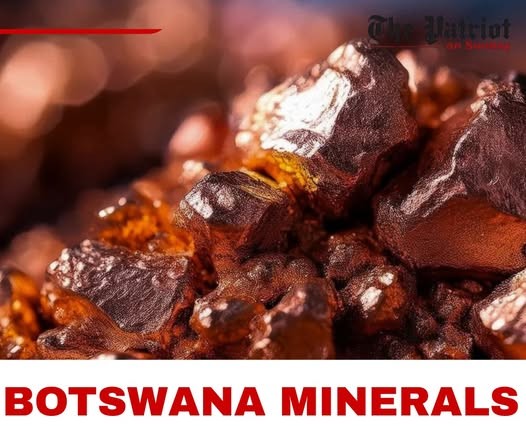
The company recognized that relying exclusively on diamonds left it dangerously exposed. Consequently, the board approved a shift toward “critical minerals,” specifically copper. Using advanced artificial intelligence (AI) models on their unique database of 95,000 sq km, the company located eleven important copper targets and obtained eight prospecting licenses in northwest Botswana. This pivot is driven by the global green energy transition; copper is essential for electrification, and Botswana is emerging as a significant copper province. Thus, the new name signifies a transition from a single-asset explorer to a diversified mineral developer, hedging against the volatility of the gem market.
The focus areas are Securing the Chain, State Control, and Local Value Addition.
While Botswana Minerals diversifies into copper, the Botswana government is simultaneously tightening its grip on diamonds to ensure the national economy captures more than just the extraction value. The recent 10-year sales agreement with De Beers is the mechanism for this control. The government, through the joint venture Debswana, will see its share of sales increase from 25% to 40% over five years, eventually reaching 50%.
This equity acquisition is designed to force “beneficiation”—the process of adding value locally. Historically, Botswana exported rough stones to cutters in India or China. Now, the state-owned Okavango Diamond Company (ODC) is pivoting from volatile auctions to contract sales, providing stability for local manufacturers. Furthermore, the government can mandate that a portion of these stones undergo local polishing due to its increased share. Initiatives like the De Beers Diamond Entrepreneurship Programme are training local firms in cutting, polishing, and jewelry design.
The goal is to strengthen the local supply chain to handle “finished goods.” By controlling supply, Botswana can brand its diamonds as ethically sourced and rare, moving up the value chain from mining to marketing and exporting polished gems.
The synthetic threat is a 25 percent market disruption.

Despite these ambitions, the future is clouded by the rapid expansion of Laboratory-Grown Diamonds (LGDs). Industry reports indicate that LGDs are projected to account for more than 25% of the diamond industry. These stones are chemically identical to mined diamonds but retail for a fraction of the price, eroding margins for natural stones, particularly in the low-to-mid-tier markets.
Botswana’s national strategy to counter this threat is aggressive differentiation. The government has launched a P13.2 billion (US$100 million) marketing campaign to promote “natural” diamonds as rare, emotional, and valuable, while lobbying for legislation (successfully in India) to reserve the word “diamond” exclusively for natural stones, branding LGDs as “synthetics.”
The challenge, however, is structural. While Botswana controls the supply of natural diamonds, it does not control consumer preference. The younger generation may prioritize affordability and the perception of “conflict-free” lab stones over the geological romance of a billion-year-old gem. Furthermore, De Beers—once the guardian of natural diamonds—now produces lab-grown diamonds (via Element Six), leading to a market bifurcation where natural stones are treated as luxury goods while synthetics dominate fashion jewelry.
Production, Challenges, and the Future Outlook
Looking ahead, Botswana’s national strategy will impact production by prioritizing volume restraint. Rather than flooding the market, Botswana is managing supply to maintain scarcity and price stability. Reports indicate production dropped from 17 million carats to 15 million in 2025, with the government clearing older stockpiles to balance the market.
For Botswana Minerals PLC, the future is cautiously optimistic but fundamentally altered. The company is leveraging its AI exploration to find high-value copper and rare natural diamonds—specifically the large, high-quality stones that LGDs cannot replicate. However, the foreseeable challenges are daunting:
- Capital Intensity: Moving from exploration to mining copper requires billions of dollars and infrastructure Botswana is still developing.
- The LGD Price War: As LGD prices drop further, they pressure the lower end of the natural market, potentially making some marginal diamond mines unprofitable.
- Geopolitical Competition: Other African nations are watching; if Botswana raises taxes or demands too much equity, miners may invest elsewhere.
Conclusion
Will the future be better for Botswana Minerals PLC? Yes, but not in the way it was ten years ago. The company will likely succeed as a diversified mining house—thriving on copper for volume and high-end diamonds for margin. However, the glory days of effortless diamond wealth are over. The government’s aggressive push to control cutting, polishing, and branding is the right defensive move to protect the local economy from the “lab-grown” storm. Botswana Minerals PLC represents the necessary evolution of the African miner: leaner, tech-driven, diversified, and acutely aware that in a world of synthetic factories, only those who control the narrative and the critical minerals will survive.