


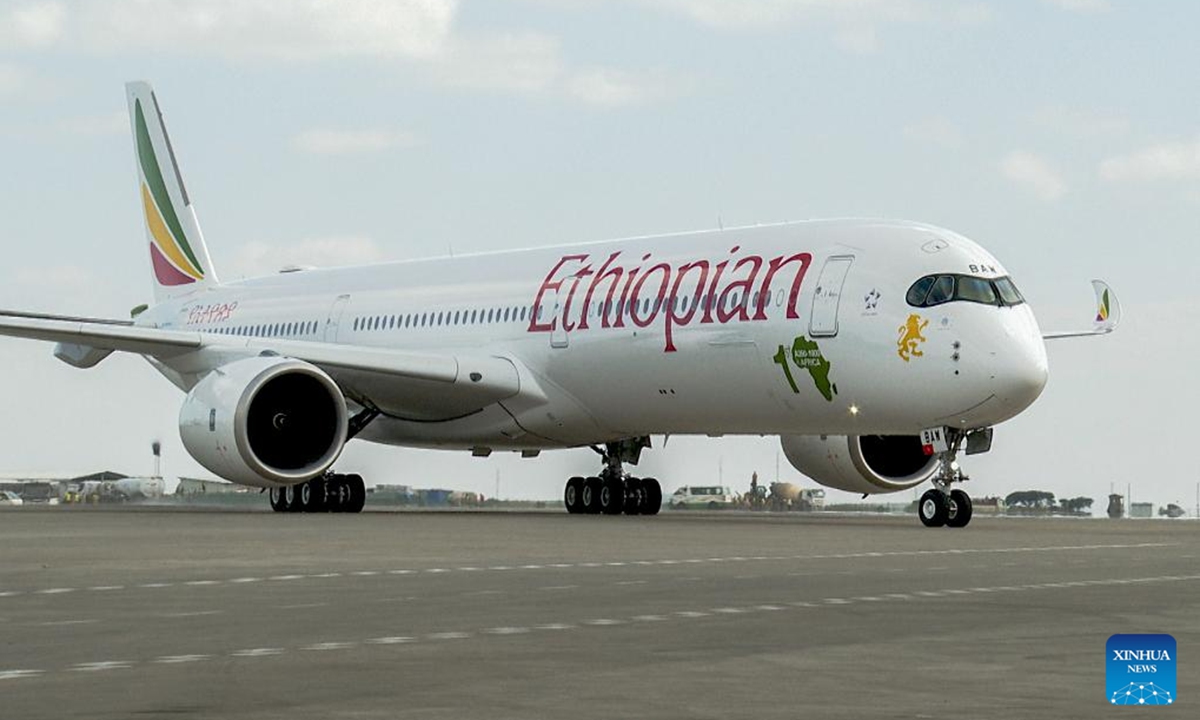
On January 10, 2026, Ethiopian Prime Minister Abiy Ahmed officially laid the cornerstone for the Bishoftu International Airport (BIA), a project that officials have hailed as “the largest aviation infrastructure project in Africa’s history”. By Simeon Gettachew
Located approximately 40 kilometers southeast of Addis Ababa in the town of Bishoftu, a US$12.5 billion airport megaproject is being built. It is a strategic declaration of Ethiopia’s ambition to cement its position as Africa’s premier aviation gateway, a vision that will reshape the country’s economic landscape, transform regional connectivity across East Africa, and redefine the commercial fortunes of Ethiopian Airlines for generations to come.
From Bole to Bishoftu is a Necessary Transition
The decision to build an entirely new airport rather than expand the existing Addis Ababa Bole International Airport stems from a fundamental capacity constraint. Bole International Airport, which currently serves as Ethiopian Airlines’ primary hub, has an annual capacity of approximately 25 million passengers. By 2026, this facility was approaching its maximum operational limits, unable to accommodate the sustained double-digit growth that Ethiopian Airlines has consistently delivered.
Bishoftu International Airport is designed on a scale that dwarfs its predecessor. The first phase alone will accommodate 60 million passengers annually, with an ultimate master plan capacity of 110 million passengers per year. The airport will feature four parallel runways, parking space for 270 aircraft, and a passenger terminal sprawling across 1.1 million square meters. Cargo handling capacity will reach 1.5 million tons annually in the first phase, with ultimate capacity projected at 3.73 million tons.
Crucially, the transition is not designed as an abrupt replacement but as a carefully managed evolution. Bole International Airport will retain approximately 90 to 95 per cent of domestic passenger traffic, while Bishoftu will handle all international passenger traffic, particularly international transfer flows, along with international belly cargo and freighter operations. This “two-airport system” ensures service continuity while allowing Bishoftu to emerge as the primary gateway for global connectivity.
Environmental Transformation and Challenge

Prime Minister Abiy lays Foundation stone
The environmental implications of constructing Africa’s largest airport on a 3,500-hectare site near Bishoftu are profound and multifaceted. Ethiopian Airlines Group has conducted comprehensive Environmental and Social Impact Assessments (ESIA) aligned with the requirements of the Ethiopian Environmental Protection Authority, the African Development Bank’s Integrated Safeguards System, the International Finance Corporation Performance Standards, and the World Bank Environmental and Social Framework.
The positive environmental dimensions are considerable. The Bishoftu site sits at an elevation of 1,910 meters—400 meters lower than Addis Ababa—which provides optimal conditions for aircraft performance. This lower altitude allows for greater payload on long-haul flights with reduced fuel consumption, delivering measurable carbon savings across Ethiopian Airlines’ global network. Sustainability is embedded in the airport’s design philosophy, with the project aiming for LEED Gold certification through natural ventilation, effective solar shading, semi-open spaces that allow passengers to enjoy the local climate year-round, storm water reuse via bioswales, on-site photovoltaics, and the use of local materials to reduce carbon footprint.
However, the environmental challenges are equally significant. The construction of four parallel runways and the railway connection to Addis Ababa requires extensive land clearing and soil excavation, potentially leading to erosion and dust pollution during the multi-year build. Climate analysts have noted that the airport’s operations could substantially increase Ethiopia’s aviation-related greenhouse gas emissions. The project will also generate high demand for concrete and asphalt, with associated environmental costs. Water resources, including the Akaki-Gerbi and Dukem Rivers, face pollution risks from construction and operational activities.
The social displacement dimension has proven particularly contentious. The Oromo Liberation Front has alleged that approximately 3,000 households—around 15,000 people—from six villages have been displaced, characterizing the cumulative effect of land seizures as reaching the level of “ethnic cleansing”. Ethiopian Airlines officials have acknowledged that about 2,500 farmers were relocated and rehoused at a cost of $350 million. The project’s ESIA framework includes provisions for fair and transparent compensation, resettlement programs, livelihood restoration, and community health and safety measures, yet the scale of displacement underscores the human cost embedded in this monumental undertaking.
The impact on Addis Ababa itself will be nuanced. While the capital will lose its status as the primary location of Ethiopia’s main international airport, it will gain a modern multi-lane highway and a 38-kilometer high-speed railway connecting the city to Bishoftu, with operating speeds of 120 to 200 kilometers per hour. This transport corridor will integrate the two airports into a seamless aviation ecosystem, potentially stimulating development along the Addis Ababa–Bishoftu–Dukem–Mojo axis. Bishoftu itself will be transformed from a modest town into a global business hub, with the surrounding “airport city” projected to generate thousands of jobs in commercial, retail, hospitality, and logistics sectors.
Economic Ripples Across Ethiopia and East Africa
The economic benefits of Bishoftu International Airport extend far beyond the boundaries of Oromia Regional State. The project is expected to generate between 26,000 and 80,000 direct and indirect jobs, with employment spanning construction, aviation, logistics, hospitality, retail, and ancillary services. The multiplier effects across Ethiopia’s economy will be substantial as workers spend wages, businesses expand to serve airport-related demand, and supply chains develop to support airport operations.
For Ethiopia’s tourism sector—historically underdeveloped relative to the country’s extraordinary cultural and natural heritage—Bishoftu represents a transformative opportunity. The airport will significantly increase passenger traffic and cargo services, leading to a major rise in aviation revenue and making a strong contribution to Ethiopia’s national income. Even a fraction of Ethiopian Airlines’ 20 million annual passengers visiting Ethiopia could generate a million new tourists each year. The airport will improve access to Ethiopia’s iconic destinations—the rock-hewn churches of Lalibela, the ancient obelisks of Axum, the Simien Mountains, the Omo Valley, and the Danakil Depression—making it feasible for international visitors to experience multiple attractions within a single journey.
The airport’s impact on foreign direct investment is equally significant. Efficient transport infrastructure is one of the first factors international investors consider when evaluating investment destinations. Bishoftu International Airport will enhance Ethiopia’s attractiveness to global investors, boosting foreign direct investment inflows across manufacturing, agriculture, technology, and services sectors.

Bole International Airport
For East Africa as a whole, Bishoftu’s strategic importance cannot be overstated. The airport is positioned as a “primary engine for African trade” and “the world’s most advanced connection point between continents”. It will directly support the African Continental Free Trade Area (AfCFTA) by improving logistics, connectivity, and market access. With cargo capacity to handle 3.73 million tons annually, the airport can tap into Africa’s significantly underused cargo capacity, facilitating the movement of goods across the continent and reducing reliance on non-African logistics hubs. The airport city concept may catalyze industrial zones, logistics parks, and service clusters, enhancing regional employment and integration into global supply chains.
For neighboring countries—including Kenya, Tanzania, Uganda, Rwanda, South Sudan, and Djibouti—Bishoftu will offer enhanced connectivity to global markets, potentially reducing transit times and logistics costs for regional exports. The airport’s position as a major intercontinental hub will strengthen East Africa’s integration into global trade networks, positioning the region as a more attractive destination for international investment and tourism.
Ethiopian Airlines Financial Benefits and Strategic Transformation
For Ethiopian Airlines, Bishoftu International Airport represents both the greatest financial commitment and the greatest commercial opportunity in the carrier’s eight-decade history. The airline, already Africa’s largest carrier with $9.1 billion in annual revenue for the 2025/26 fiscal year—a 20 per cent increase from the previous year—is funding 20 to 30 per cent of the project directly from its balance sheet and operating revenues. The airline has already injected $700 million as early investment, with $610 million allocated specifically for earthworks.
The financial structuring of the project reflects sophisticated corporate finance thinking. Ethiopian Airlines has divided the megaproject into multiple components, each targeting different sets of lenders and contractors. The railway and transport component, valued at $954 million, is being packaged separately under a project-finance model to widen the pool of financiers and technical partners. Construction procurement has been divided into five packages, with the bulk of capital expenditure procured through lump-sum turnkey contracts designed to shift construction and performance risks to contractors and enforce tighter cost and schedule discipline. London-based Clyde & Co. has been hired as legal advisor to help establish the special purpose vehicle company that will anchor the financing structure.
The contract opportunities generated by Bishoftu are unprecedented in scale and global reach. Ethiopian Airlines has shortlisted 33 companies and consortiums across four main construction packages. Chinese companies and China-linked joint ventures account for 15 positions, representing the largest national grouping in the procurement process. Major Chinese firms on the shortlist include China Communications Construction Company, China Construction Eighth Engineering Division, China Road and Bridge Corporation, and China Civil Engineering Construction Corporation. However, the competition is genuinely international, with shortlisted entities from Italy (Webuild, ICM), Türkiye (ICTAS, Kalyon, MAPA), France (VINCI Construction), South Korea (Samsung C&T), the United States (Lane Construction), Portugal (Mota-Engil), Russia, India, and Qatar.
The United States has demonstrated particular interest in securing participation in the project, with Washington reportedly exploring ways to link US involvement to Ethiopia’s potential purchase of additional Boeing aircraft. The U.S. Department of Commerce has established an official Bishoftu International Airport virtual matchmaking initiative specifically designed to connect American and international companies interested in participating in tender packages and forming partnerships, joint ventures, consortiums, and subcontracting arrangements.
Beyond the headline civil construction contracts, the supply chain opportunities are vast and diverse. An airport of Bishoftu’s size requires enormous quantities of specialized technology and equipment: terminal systems, baggage handling technology, security equipment, communications infrastructure, aircraft-support systems, and airfield technology. These create substantial contracts beyond basic construction. The airport city will integrate commercial, retail, hospitality, and logistics hubs across 35 square kilometers, creating long-term opportunities for Ethiopian businesses participating as suppliers and subcontractors. The Skylight Hotel brand, developed by Ethiopian Airlines, could become a regional or global hospitality brand through the airport city development.
Joint ventures and collaborations represent another significant dimension of Ethiopian Airlines’ strategic approach. The airline is positioning itself not merely as a client but as a partner capable of leveraging its operational expertise, market access, and financial credibility to attract world-class partners. The financing structure, with Ethiopian Airlines contributing 20 to 30 per cent equity, is designed to shield the airline from balance-sheet risks while attracting global capital. Lenders from the Middle East, Europe, China, and the United States have shown strong interest in financing the project. The African Development Bank has been appointed as the mandated lead arranger to mobilize $8 billion in financing, with the bank having already committed $500 million. Discussions are also ongoing with the Asian Infrastructure Investment Bank, the China Export-Import Bank, the European Investment Bank, and the U.S. Development Finance Corporation.
The long-term financial benefits to Ethiopian Airlines are transformative. Bishoftu will enable the carrier to handle passenger volumes more than four times greater than Bole’s current capacity, allowing Ethiopian Airlines to capture a significantly larger share of the growing Africa–global travel market. The dedicated cargo facilities will enable Ethiopian Airlines to expand its already substantial cargo operations, which are critical to the airline’s revenue diversification strategy. The aircraft maintenance hub included in the first-phase development will allow Ethiopian Airlines to deepen its maintenance, repair, and overhaul capabilities, potentially generating third-party revenue.
Most importantly, Bishoftu positions Ethiopian Airlines for the next phase of African aviation growth. With the African Continental Free Trade Area creating new imperatives for intra-African connectivity, and with Africa’s aviation market projected to be among the fastest-growing globally, Ethiopian Airlines is securing the infrastructure it needs to remain Africa’s dominant carrier for decades to come. The airline’s revenue growth—20 per cent year-over-year to $9.1 billion—demonstrates that the underlying demand exists. Bishoftu provides the capacity to sustain and accelerate that growth trajectory.
Conclusion
The Bishoftu International Airport is far more than a replacement for Addis Ababa Bole International Airport. It is a declaration of Ethiopia’s intent to lead Africa’s aviation revolution, a catalyst for economic transformation across the country and the East African region, and a strategic investment in Ethiopian Airlines’ long-term commercial dominance. The environmental challenges are significant, the social costs of displacement are real, and the financial risks of a $12.5 billion infrastructure project are substantial. Yet the potential rewards—enhanced connectivity, expanded trade, accelerated tourism growth, thousands of jobs, and the consolidation of Ethiopia’s position as Africa’s premier aviation gateway—make this the most consequential infrastructure project in Ethiopian history since the construction of the Addis Ababa–Djibouti Railway. As Prime Minister Abiy Ahmed declared at the groundbreaking ceremony, the project marks “the beginning of Ethiopia’s move toward modernization, prosperity and enthusiasm for change”. The runway at Bishoftu is not just being paved with concrete; it is being paved with the ambitions of a nation determined to soar.