


Speaking at the EABC Summit, Cabinet Secretary Beatrice Askul Moe emphasized the importance of regional integration for achieving economic transformation in East Africa.
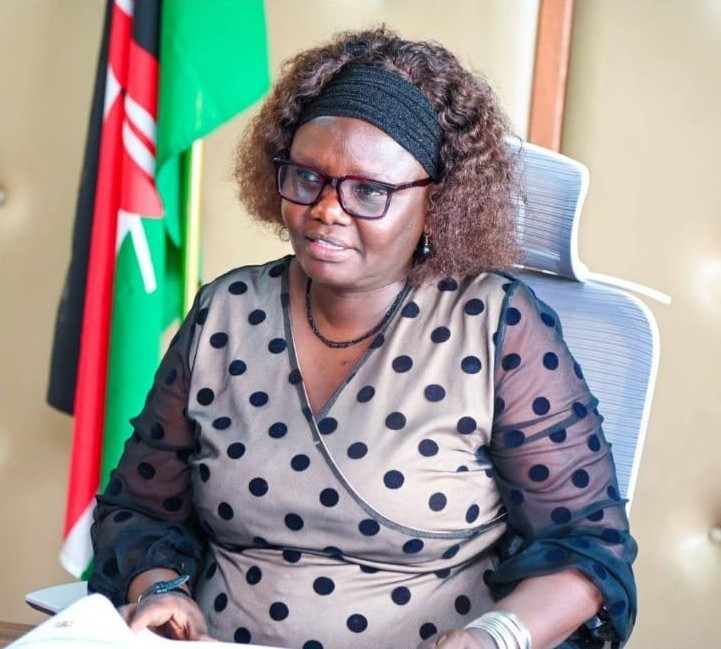
At the East African Business Council (EABC) Conference held at Safari Park Hotel in Nairobi, key stakeholders from government, the private sector, and development institutions gathered to deliberate on the future of regional trade, investment, and economic integration. Among the distinguished speakers was Hon. Beatrice Askul Moe, Cabinet Secretary, who delivered a compelling address centered on strengthening East Africa’s economic resilience and unlocking sustainable growth through regional cooperation.
Her remarks emphasized the critical role of regional integration as a driver of economic transformation across the East African Community (EAC). She underscored that deeper collaboration among member states is essential to removing trade barriers, improving cross-border efficiency, and creating a more competitive regional market capable of attracting both local and international investment.
The Cabinet Secretary highlighted that East Africa’s economic potential remains significant, driven by a young population, expanding infrastructure networks, and growing industrial activity. However, she noted that fully realizing this potential requires coordinated policy frameworks that support trade facilitation, infrastructure connectivity, and harmonized regulatory systems across the region.
A key focus of her address was the importance of empowering the private sector as a central engine of growth. Hon. Beatrice Askul Moe reiterated that governments alone cannot drive economic transformation, and that sustainable progress will depend on strong partnerships with businesses, investors, and development partners. In this regard, SMEs were identified as critical contributors to job creation and innovation, requiring targeted support to expand their participation in regional value chains.
The EABC Conference provided a timely platform to reinforce these priorities, bringing together influential voices committed to advancing East Africa’s integration agenda. In this context, the Cabinet Secretary’s remarks aligned with a broader regional consensus: that trade, investment, and industrial development must be pursued through collective action rather than isolated national strategies.
She further noted that improving infrastructure—particularly in transport, logistics, and energy—remains essential for reducing the cost of doing business and enhancing regional competitiveness. Strengthening these sectors will enable East Africa to better position itself within the global economy and respond effectively to shifting international trade dynamics.
In conclusion, Hon. Beatrice Askul Moe’s address reaffirmed a shared vision for a more integrated, resilient, and prosperous East Africa. Her message called for sustained collaboration, policy alignment, and commitment from all stakeholders to transform regional ambitions into tangible economic outcomes.
As East Africa continues its journey toward deeper integration, the leadership demonstrated at the EABC Conference reflects a growing determination to move from dialogue to implementation.