


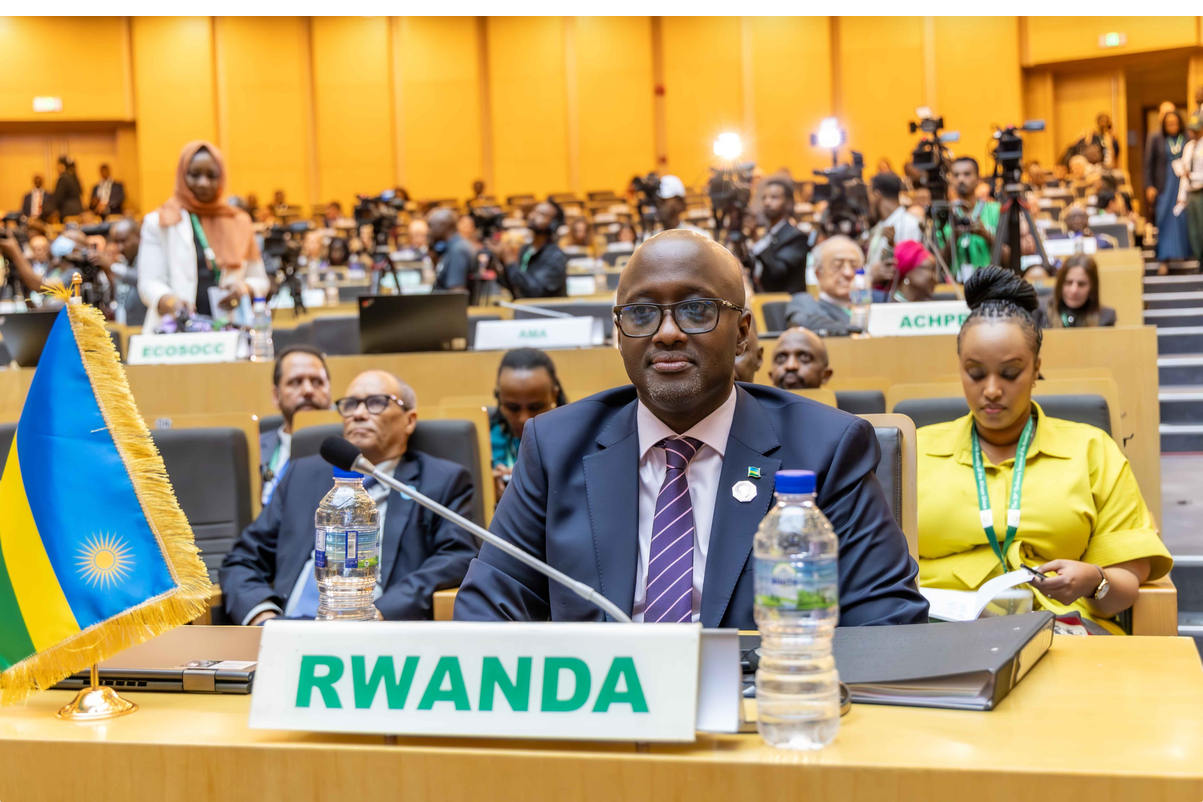
The role that African governments and regional and national institutions should play if they are to defeat the US–Rwanda Proxy War to plunder the DRC resources. By Michael MIshun, Geopolitical Analyst, London.
The eastern Democratic Republic of the Congo is bleeding. Goma, Bukavu, Uvira—once thriving provincial capitals—now lie under the heel of the M23 rebel movement, a force that United Nations experts have conclusively proven is controlled, supplied, and directed by the Rwandan government. Since late 2021, Rwanda and its proxy militia have stormed through mineral-rich lands, inflicting brutal violence and triggering mass displacement on a scale unseen since the Congo Wars of the 1990s. The question before Africa is not whether this is an African problem—it is the African problem. For there can be no African Renaissance, no AfCFTA-driven economic transformation, no continental forward momentum, if the very heart of Africa’s resource wealth is being looted to enrich Africa’s enemies. The defeat of the United States and Rwanda in the DRC is not merely a Congolese imperative; it is an existential necessity for the entire African continent.
The Anatomy of a Proxy War
The M23 is not a spontaneous rebellion. It is an instrument of foreign conquest. UN experts have documented that between 5,000 and 7,000 Rwandan soldiers are deployed on Congolese soil, fighting alongside M23 rebels and exercising de facto control over the group. Rwandan troops have been captured by the Congolese army on the front lines, proof positive of Kigali’s direct military intervention. Uganda, too, has been implicated, with civil society in North Kivu documenting the presence of Ugandan military personnel supporting M23 operations.
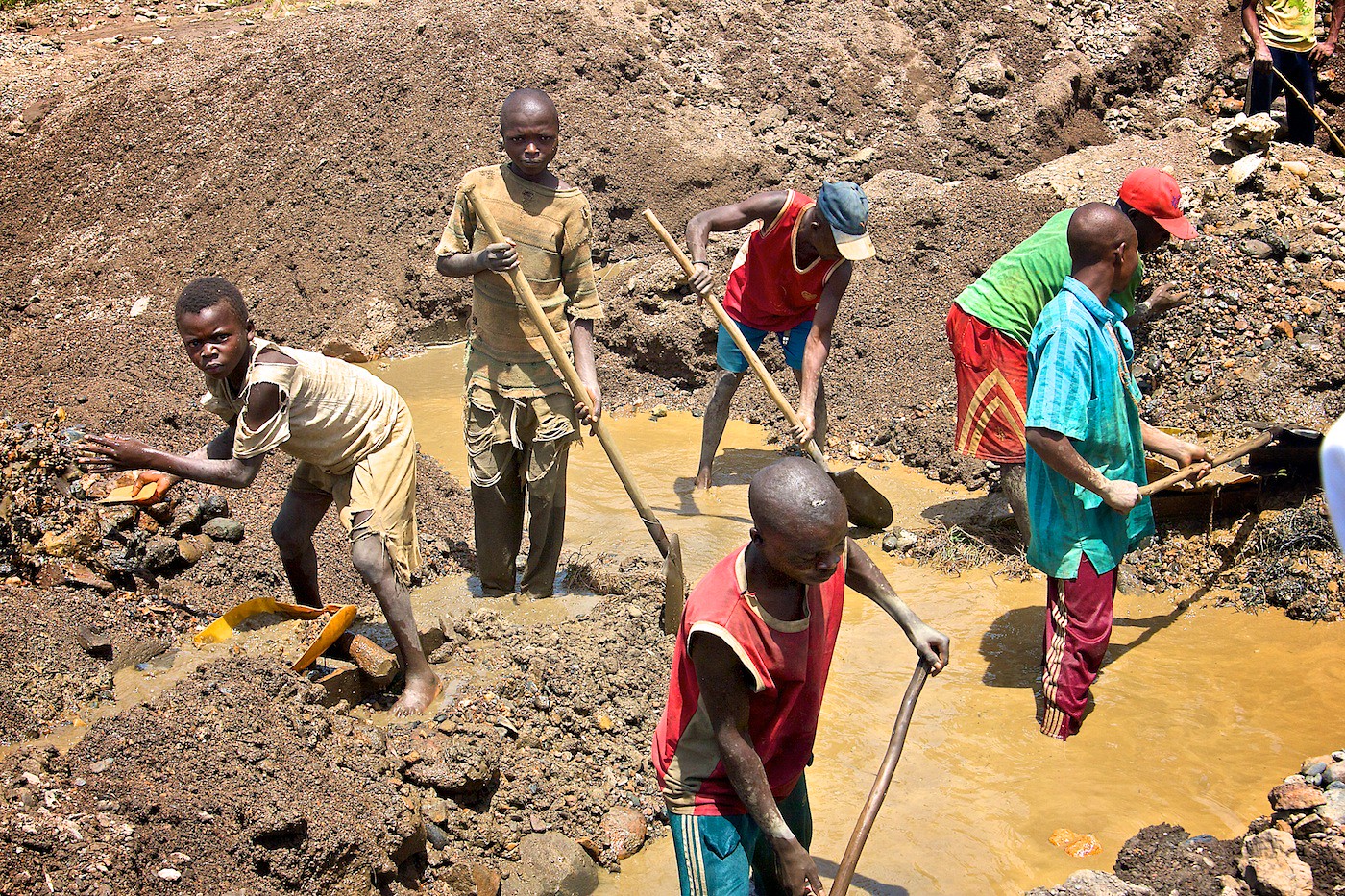
This is not a civil war. It is an invasion by proxy—a deliberate strategy of resource predation dressed in the clothes of ethnic grievance. Rwanda, through its support of M23, has gained control over mineral-rich territories and channels illegally mined resources into international markets. The Rubaya coltan mine, which supplies more than 15% of the world’s tantalum—a mineral essential for smartphones and computers—has been under M23 control since 2024, generating approximately $800,000 per month in illicit revenue for the rebels. A United Nations report confirmed that Rubaya’s minerals were smuggled through the Rwandan border, noting that Rwanda’s coltan exports in 2023 were 50% higher than in 2022—a statistical impossibility without the systematic plunder of Congolese territory.
The American Role
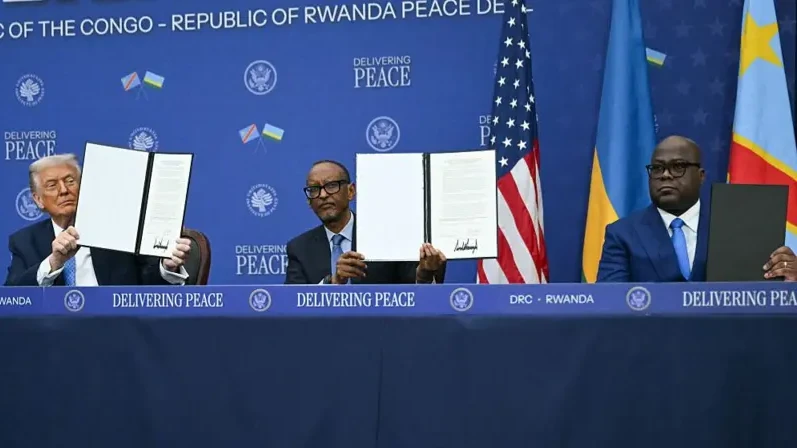
The United States cannot claim innocence in this tragedy. Washington has sustained alliances with Rwanda and Uganda for decades, consistently overlooking atrocities in support of these allies. The June 2025 “peace agreement” brokered by the Trump administration between Rwanda and the DRC was framed as diplomacy but functioned as a cover for resource extraction. A key clause committed the countries to “mutually beneficial partnerships and investment opportunities”—specifically, the extraction of the DRC’s mineral wealth by US private interests. The Oakland Institute has documented that this arrangement was “part of United States’ broader geopolitical struggle with China for control over critical resources”. Far from fostering peace, over a thousand civilians have been killed since the deal was signed.
The parallel to Ukraine is unmistakable. Just as Russia orchestrates insurgency in the Donbas while denying its involvement, Rwanda directs M23 while publicly maintaining its innocence. Just as the United States uses Ukraine as a proxy to weaken Russia, Washington uses Rwanda and Uganda as proxies to secure Congolese minerals in the great-power competition with China. The Congolese people—like the Ukrainian people—are paying for this geopolitical chess game with their lives. Over 8.2 million Congolese are now displaced, with projections of 9 million by the end of 2026. The M23 has summarily executed children. This is the human cost of American resource strategy.
What Leadership the DRC Requires
To counter this onslaught, the DRC requires leadership of extraordinary courage and strategic clarity. President Félix Tshisekedi has taken important steps—forming a broad-based government of national unity and restructuring the army. But more is needed.
First, the DRC must learn from Ukraine’s experience: information warfare is as important as conventional combat. Ukraine succeeded in part by documenting Russian atrocities in real-time and mobilizing global public opinion. The DRC must similarly broadcast the evidence of Rwandan and Ugandan military intervention to every international forum, leaving no room for Kigali’s denials.
Second, the DRC must diversify its security partnerships. Just as Ukraine has drawn support from multiple sources, the DRC must deepen its engagement with the Southern African Development Community (SADC), which has already deployed troops, and with the African Union’s mediation efforts. Reliance on Western security guarantees is a fool’s errand when Washington is complicit in the predation.
Third, the Congolese state must secure its mineral wealth through transparent supply chains. The current system, where “formalized” mineral supply chains from eastern DRC to Rwanda operate under the guise of “regional integration,” is a mechanism of legalized theft. The DRC must insist on traceability mechanisms that distinguish Congolese minerals from Rwandan-smuggled product—and demand that international buyers, including US tech companies, be held accountable for sourcing from conflict zones.
Fourth, Tshisekedi must build domestic political cohesion. Former president Joseph Kabila’s alignment with M23 in rebel-held territory represents a dangerous parallel power play that undermines national unity. A unified national front—political, military, and social—is non-negotiable if the DRC is to resist external aggression.
The African Union’s Moment of Truth
The African Union has a responsibility that it cannot evade. The AU has welcomed ceasefire protocols and humanitarian access agreements, but these are palliatives, not cures. The AU-mandated mediation led by Togo is a step in the right direction, but the AU must go further.
The African Union must:
Impose collective African sanctions on Rwanda and Uganda for their violation of the sovereign territorial integrity of a fellow AU member state. The UN Security Council has already documented Rwanda’s support for M23. Africa need not wait for Western permission to act.
Deploy a robust African peacekeeping force under AU command—not a toothless observer mission, but a force with a mandate to separate aggressor from victim and secure mineral-rich territories from rebel control.
Demand that all African nations refuse to purchase or process minerals of Congolese origin that pass through Rwandan or Ugandan supply chains. The AfCFTA cannot succeed if it facilitates the laundering of stolen resources.
Speak with one voice against the American proxy war. The AU must publicly name the United States’ role in this tragedy and demand that Washington cease its cynical manipulation of African conflicts for resource access.
There Can Be No African Forward Without a Free Congo
The AfCFTA represents Africa’s great economic hope—a continental market of 1.4 billion people, the largest free trade area in the world. But what use is economic integration if the continent’s richest resource region is under foreign occupation? What use is “African solutions to African problems” if African institutions lack the will to confront African aggressors?
The DRC contains the lion’s share of the world’s cobalt, coltan, copper, and diamonds—the minerals that power the global green transition and digital economy. Whoever controls the Congo controls the future. If Africa allows the Congo to be plundered by Rwandan proxies and American interests, it is surrendering its own destiny to foreign powers. There will be no African century; there will only be a continuation of the extraction economy that has impoverished the continent for five hundred years.
The defeat of the United States and Rwanda in the DRC is not merely a military objective. It is a moral imperative. It is a test of African sovereignty. It is the prerequisite for any genuine African renaissance. The Congolese people have suffered enough—over six million dead in three decades of war. The time for half-measures and diplomatic niceties is over.
Africa must stand with the DRC. Not with words, but with action. Not with condolences, but with consequences. The centre of the continent cannot be allowed to fall. For if the Congo falls, Africa falls with it