


Insights from Anataria Uwamariya at the 2026 East Africa Business Council Conference. Reporting by Angelina Nalobo
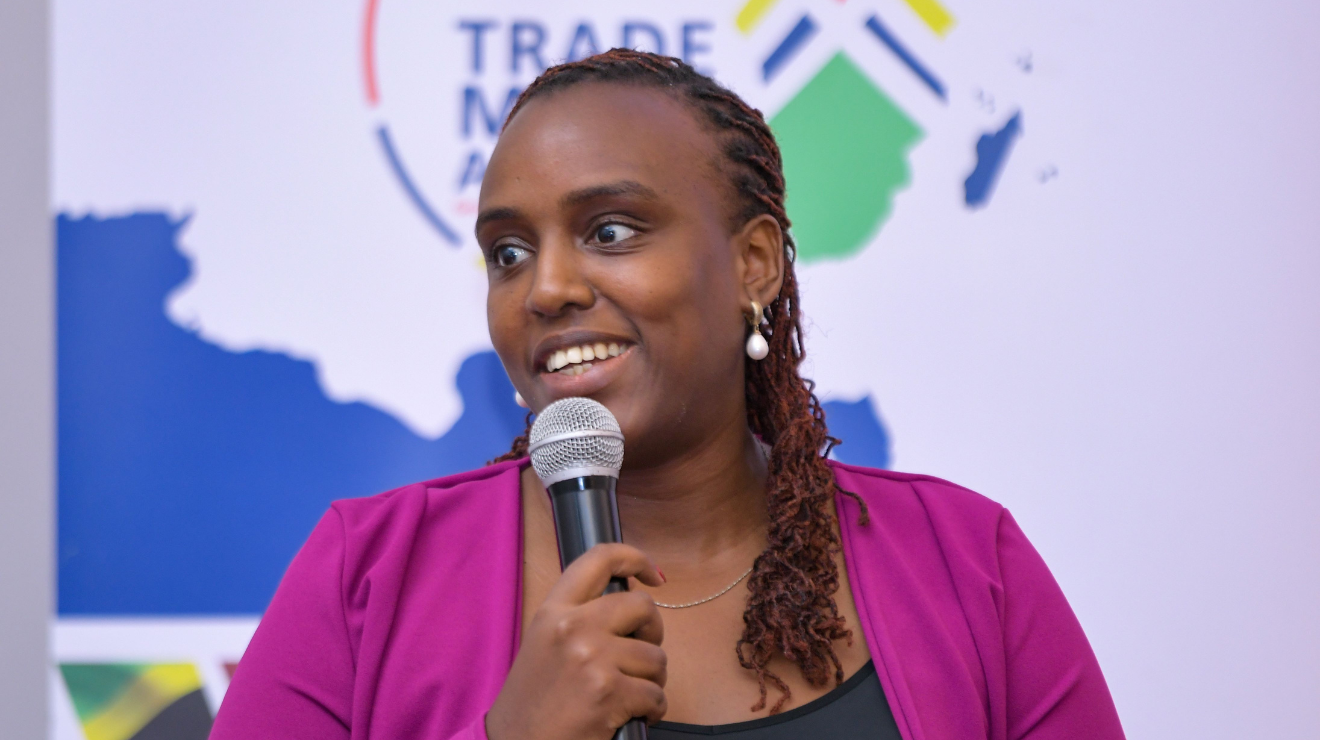
At the East African Business Council (EABC) Conference held at Safari Park Hotel in Nairobi, discussions centered on strengthening regional trade systems, improving market competitiveness, and positioning East Africa as a unified investment destination. Among the notable contributors was Anataria Uwamariya, Director of Business Competitive Trademark in Africa, who delivered key insights on the role of intellectual property, brand competitiveness, and trade protection in advancing Africa’s economic growth.
Her address emphasized that in today’s global economy, competitiveness is no longer defined solely by production capacity or market size, but increasingly by the strength of branding, intellectual property protection, and the ability of African businesses to safeguard and scale their innovations across borders.
A key message from her remarks was the urgent need to strengthen trademark systems across African markets. She highlighted that inconsistent regulatory frameworks and limited awareness among SMEs continue to hinder the ability of African businesses to fully benefit from their intellectual property assets. Without stronger protection mechanisms, many businesses remain vulnerable to imitation, loss of value, and restricted regional expansion.
Anataria Uwamariya further stressed that harmonizing intellectual property systems within the East African region is essential to unlocking cross-border trade opportunities. A unified approach, she noted, would not only protect businesses but also enhance investor confidence and encourage the growth of strong African brands capable of competing globally.
The EABC Conference provided a strategic platform for these conversations, bringing together policymakers, private sector leaders, and development partners committed to advancing regional integration. In this context, her contribution reinforced the growing recognition that trade facilitation must go beyond tariffs and infrastructure to include legal and institutional frameworks that protect innovation and creativity.
She also highlighted the importance of capacity building for SMEs, noting that many small and medium enterprises across Africa lack access to the tools and knowledge required to register and enforce trademarks effectively. Strengthening awareness and simplifying registration processes were identified as critical steps toward building a more inclusive and competitive business environment.
In an increasingly interconnected global market, Africa’s ability to compete will depend on how effectively it protects and promotes its intellectual assets. As emphasized during the conference, the future of African trade will be shaped not only by what the continent produces, but by how well it protects, brands, and positions its value in global markets.
In conclusion, Anataria Uwamariya’s message underscored a vital dimension of Africa’s economic transformation: the need to build strong, recognizable, and legally protected African brands that can compete confidently on the global stage.